












High-Visibility Vehicle Markings in Ireland
Chapter 8 guidance and rear chevron kits
What does “Chapter 8” mean in practice?
When people in Ireland say “Chapter 8”, they’re usually referring to best-practice guidance around safety for work taking place on or near public roads — and, in practical terms, how visible a work vehicle is when it’s stopped roadside. Chapter 8 sits within the Traffic Signs Manual, published via the Department of Transport.
Rear chevrons and other visibility items
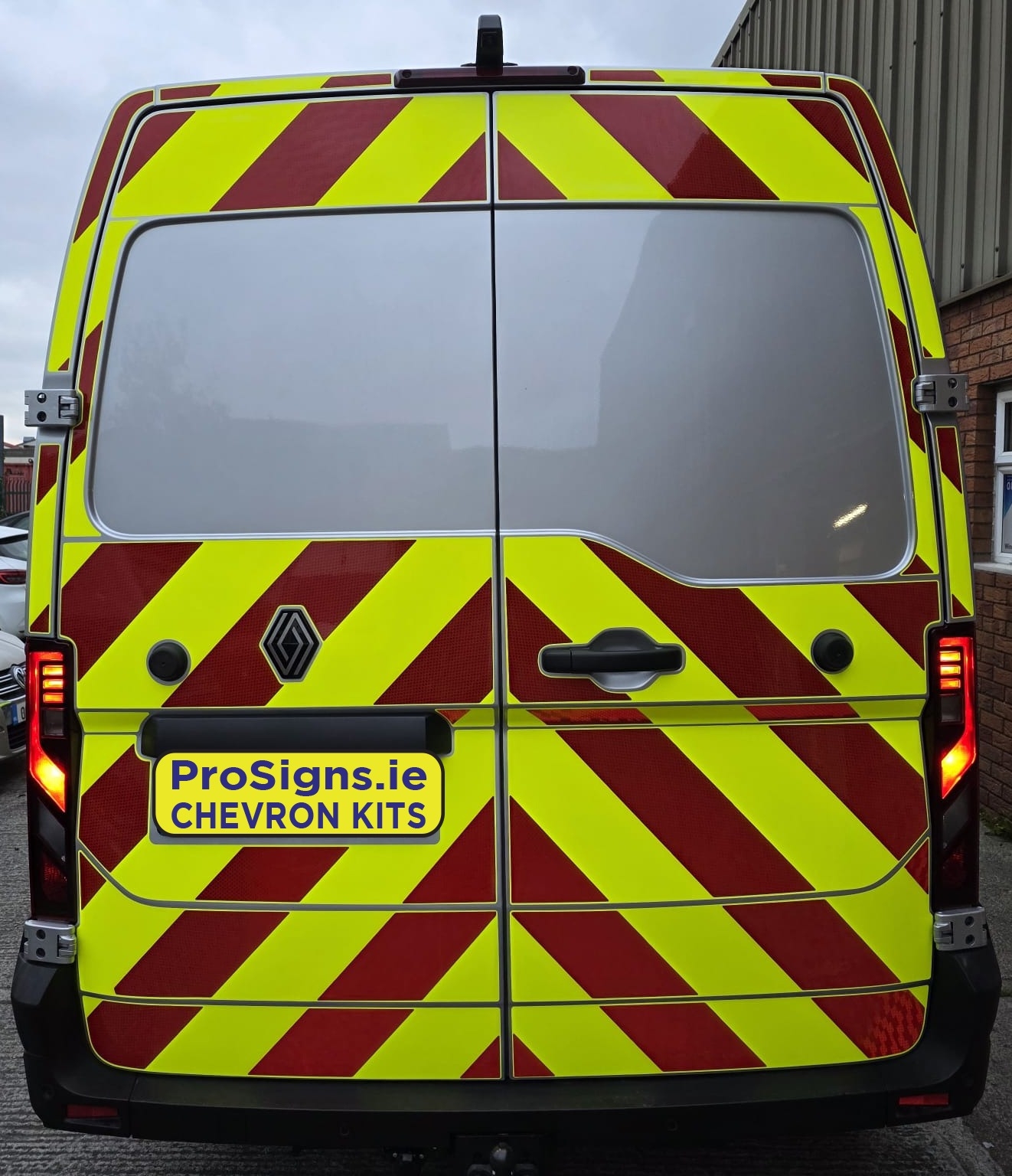
For most customers, the practical outcome is simple: the rear of the vehicle needs to be easy to notice early, especially in poor weather or low light. The most recognisable element is the rear chevron pattern (alternating diagonal red/yellow). Depending on the work and where the vehicle operates, you may also see side conspicuity markings such as a fluorescent (dayglow) yellow side stripe, reflective side tape, or side chevrons.
Materials: why chevrons work day and night
Chevrons work because the two colours are doing different jobs:
- Fluorescent (dayglow) yellow is there for daytime conspicuity — it stands out strongly in daylight and gives clear contrast. (read more at rsa.ie)
- Red reflective is there for night-time visibility — it returns light from headlights back towards the driver. In higher-visibility setups, that red reflective may be prismatic. (read more at www.rsa.ie)
Which vehicles usually need this
You’ll typically see Chapter 8-style visibility markings on vehicles used for roadside work, such as maintenance and repairs, utilities and inspections, and contractors who stop regularly on or near live traffic. The Road Safety Authority also references chevron markings as a visibility consideration for light commercial vehicles used in roadside operations. (read more at www.rsa.ie)
Do you have to do it? (in real life)
Often, it’s not experienced as one single blanket rule that applies to every van in every situation. In practice, requirements commonly come from site rules, contract specifications, client policies, and what’s considered good safety practice for the type of work being carried out.
Next step
- If you know your vehicle model, go to the shop and choose the rear chevron kit that suits your rear doors.
- If you’re not sure which option is right, send a clear photo of the back doors and I’ll point you to the correct kit.
Made by ProSigns.ie, dispatched typically within 2-3 working days from payment.
Official guidance (Ireland): Traffic Signs ManualHigh-Visibility Vehicle Markings in Ireland
When people in Ireland say “Chapter 8”, they’re usually referring to best-practice guidance around safety for work taking place on or near public roads — and, in practical terms, how visible a work vehicle is when it’s stopped roadside. Chapter 8 sits within the Traffic Signs Manual, published via the Department of Transport. For most customers, the practical outcome is simple: the rear of the vehicle needs to be easy to notice early, especially in poor weather or low light.
Segmented vs Flooded Chevron Kits
Segmented and flooded chevron kits give a similar finished appearance, but they are made and fitted differently. This guide explains the practical difference between the two formats, how each one is installed, and why flooded kits can be particularly useful for fleet operators who need easier removal at the end of a vehicle’s service life.
FOR ALL ENQUIRIES
Please contact us if you have any questions about Sign writing, sign making, vehicle livery graphics, indoor and outdoor signage, wall graphics and lettering, fascia signs, 2D and 3D PVC Foamex Metal Aluminium Acrylic Plastic Letters, Window Decal Frosting and Graphic Displays, Directory Signs, Architectural Signage, Reflective Graphics Design and Templating of Chevron and Battenberg Engineer Grade, Dayglow and retro-reflective Graphics.


