











Segmented vs Flooded Chevron Kits
Understanding the difference and choosing the right format
What is a segmented chevron kit?
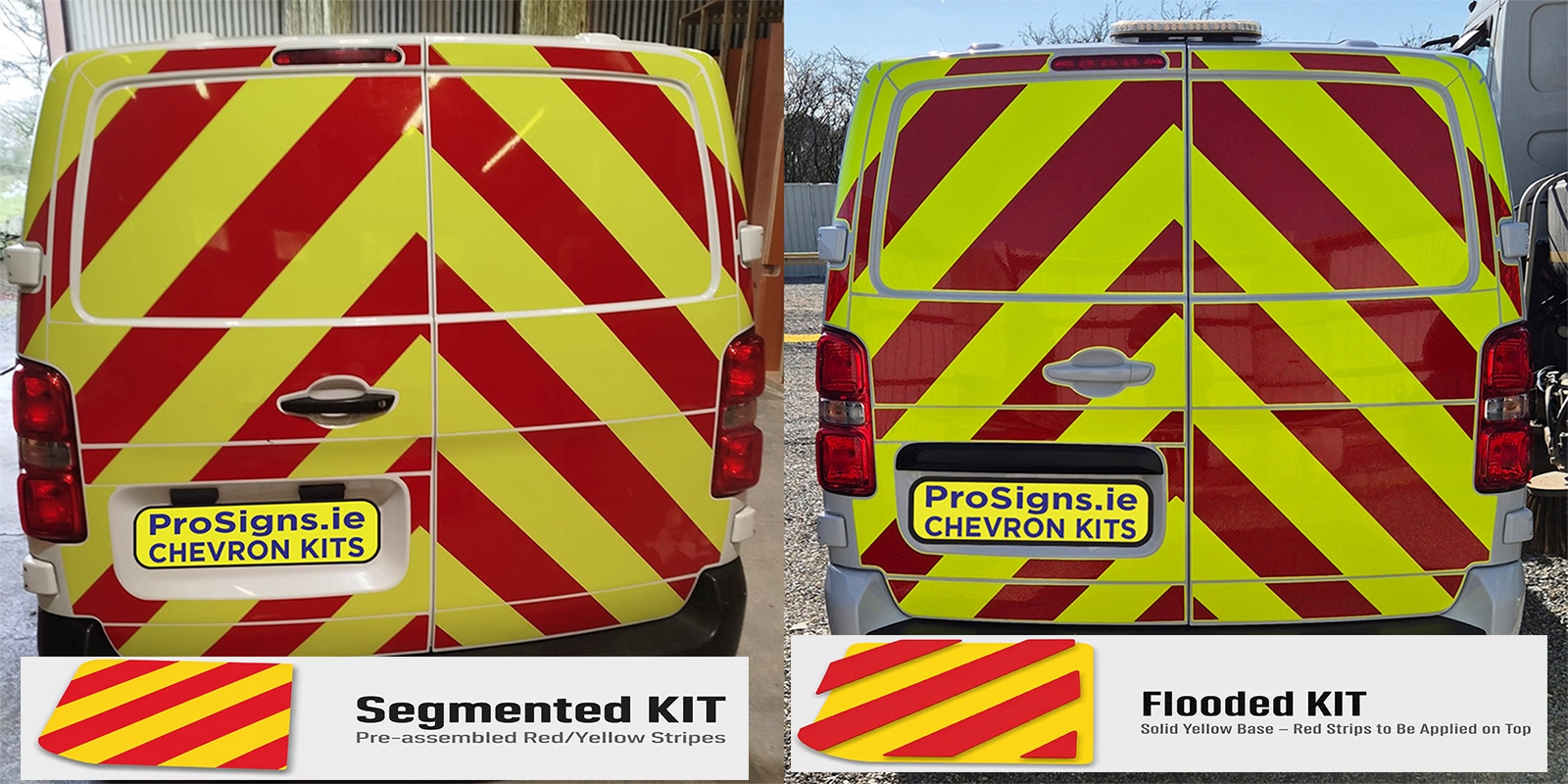
A segmented kit is supplied with the red and yellow strips pre-assembled and taped together. This keeps the individual pieces aligned and makes the kit easier and quicker to position and fit onto the rear of the vehicle.
For many customers, this is the most straightforward option: the chevron pattern is already assembled before fitting, so the installer is mainly concerned with positioning each section correctly on the vehicle.
What is a flooded chevron kit?
A flooded kit is constructed differently. Full fluorescent yellow panels are fitted first, with the red reflective pieces supplied separately for the installer to apply over the yellow.
Each red piece is numbered and identified with matching right or left references. A 3 mm yellow border around the red overlays provides a visual guide to help maintain accurate positioning and consistent spacing during fitting.
What is the practical difference?
The main difference is in how the kit is fitted and how it can be removed later.
A segmented kit is generally quicker to fit because the red and yellow sections arrive pre-assembled. A flooded kit requires more fitting time because the red reflective pieces are positioned individually over the yellow panels.
The advantage of the flooded format becomes particularly useful later in the vehicle’s life. Because the yellow base is installed as a full panel and the red pieces are applied separately, the chevron system can be easier to remove when a vehicle is replaced, rebranded, resold or decommissioned.
Which format should you choose?
For individual vehicles or where quicker fitting is the priority, a segmented kit is often the simplest option.
Flooded kits can be particularly attractive to fleet managers and commercial vehicle operators who are thinking about future removal as well as the initial installation.
Both formats are designed to provide the same clear red and yellow high-visibility chevron appearance once fitted, so the choice is mainly about fitting method and long-term practical requirements.
Next step
- If you know your vehicle model, go to the shop and choose the kit format that best suits your requirements.
- If you are unsure whether segmented or flooded is the better option for your vehicle or fleet, send a clear photo of the rear doors and we can help you choose the most suitable format.
High-Visibility Vehicle Markings in Ireland
When people in Ireland say “Chapter 8”, they’re usually referring to best-practice guidance around safety for work taking place on or near public roads — and, in practical terms, how visible a work vehicle is when it’s stopped roadside. Chapter 8 sits within the Traffic Signs Manual, published via the Department of Transport. For most customers, the practical outcome is simple: the rear of the vehicle needs to be easy to notice early, especially in poor weather or low light.
Segmented vs Flooded Chevron Kits
Segmented and flooded chevron kits give a similar finished appearance, but they are made and fitted differently. This guide explains the practical difference between the two formats, how each one is installed, and why flooded kits can be particularly useful for fleet operators who need easier removal at the end of a vehicle’s service life.
FOR ALL ENQUIRIES
Please contact us if you have any questions about Sign writing, sign making, vehicle livery graphics, indoor and outdoor signage, wall graphics and lettering, fascia signs, 2D and 3D PVC Foamex Metal Aluminium Acrylic Plastic Letters, Window Decal Frosting and Graphic Displays, Directory Signs, Architectural Signage, Reflective Graphics Design and Templating of Chevron and Battenberg Engineer Grade, Dayglow and retro-reflective Graphics.


